Why Indian Manufacturers Need Industry-Specific ERP, Not Generic Software
One of the most common questions Indian manufacturers ask while evaluating ERP software is, "Can't we simply use a standard ERP and configure it for our business?"
The answer is straightforward—sometimes yes, but often no. The difference between a generic ERP and an industry-specific ERP can significantly impact operational efficiency, productivity, and long-term profitability.
A bearing manufacturer, plywood factory, forging unit, or cosmetics company each follows unique production processes, quality standards, and compliance requirements. Generic ERP systems are rarely designed with these industry-specific workflows in mind, forcing businesses to rely on spreadsheets, manual workarounds, and disconnected processes.
This guide explains why industry-specific ERP solutions built on Odoo provide Indian manufacturers with greater operational control, improved productivity, and lower total ownership costs than generic ERP software.
What Generic ERP Gets Wrong for Manufacturers
Generic ERP systems are built to support a wide range of businesses. While they handle purchasing, inventory, accounting, and sales effectively, they often fall short when manufacturing-specific requirements become more complex.
Common challenges manufacturers face with generic ERP include:
- No support for industry-specific production tracking such as heat batches or process traceability
- Bill of Materials (BOM) structures that cannot accurately represent real manufacturing workflows
- Generic quality control processes that don't align with batch or stage-wise inspections
- Limited support for Indian compliance requirements like GST, e-Invoicing, e-Way Bills, and industry-specific reporting
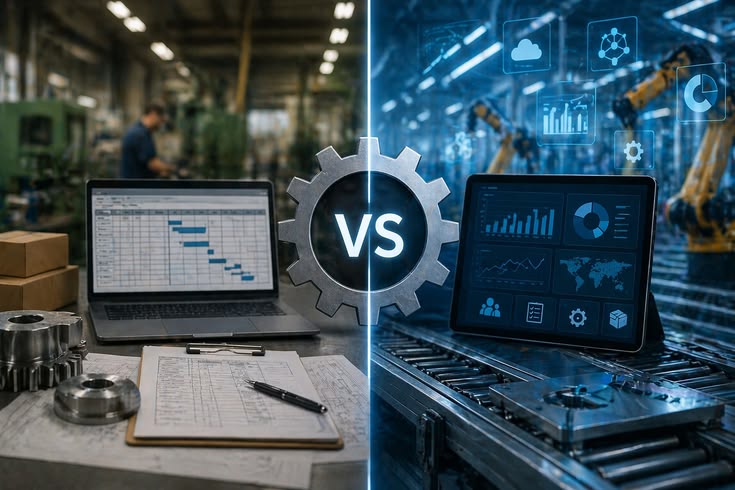
- Heavy reliance on manual spreadsheets to bridge functionality gaps
- Low user adoption because software doesn't reflect actual shop-floor operations
Instead of simplifying operations, generic ERP often creates additional administrative work. Teams spend valuable time managing exceptions rather than relying on a system built around their manufacturing process.
What Industry-Specific ERP Actually Means
The term industry-specific ERP is often used broadly. In practice, it means the ERP is designed around the operational workflows unique to your manufacturing sector.
1. Bearing Manufacturing
Bearing manufacturers manage thousands of SKUs, customer-specific part numbers, vendor-managed inventory, multi-level BOMs, lot traceability, and quality inspections throughout production.
An industry-specific Odoo solution incorporates these processes directly into production, inventory, and quality workflows rather than relying on extensive customization.
2. Forging and Casting
Forging operations require complete traceability from furnace charge through forging, trimming, machining, and finishing. Manufacturers also need die cost tracking, scrap accounting, rejection analysis, and shift-wise production reporting.
Industry-specific ERP supports these specialized manufacturing workflows from the ground up.
3. Plywood and Wood Products
Plywood manufacturers need grade-wise inventory, veneer tracking, press cycle monitoring, glue consumption analysis, and production ratios between veneer and finished boards.
Unlike generic ERP systems that treat inventory as standard products, industry-specific ERP tracks the characteristics that directly affect production planning, costing, and dispatch.
Custom ERP vs Generic ERP: Understanding the Real Cost
Many businesses assume that custom ERP solutions are always more expensive than generic software. While implementation costs may be higher initially, the long-term financial picture is often very different.
Hidden costs associated with generic ERP frequently include:
- Employee time spent managing spreadsheets and manual reconciliations
- Production errors caused by unsupported workflows
- Continuous customization expenses as business needs evolve
- Poor user adoption due to complex workarounds
- Operational inefficiencies that affect productivity and profitability
Industry-specific ERP built on Odoo is designed around existing manufacturing processes, reducing ongoing maintenance costs and lowering the total cost of ownership (TCO) over the long term.
What to Look for When Choosing a Manufacturing ERP
Selecting the right ERP requires evaluating how well the software fits your manufacturing operations—not just its list of standard features.
1. Production Workflow Support
Request demonstrations based on your actual manufacturing process instead of generic ERP presentations. Your production workflow should function naturally within the system.
2. Indian Compliance Features
Ensure the ERP includes GST, e-Invoicing, e-Way Bills, TDS, and other Indian regulatory requirements without requiring extensive third-party customization.
3. Scalability
Choose software that supports future growth, including additional plants, warehouses, product lines, users, and business units without major redevelopment.
4. Industry Experience
Implementation expertise matters as much as the software itself. An implementation partner with deep manufacturing knowledge can build workflows that truly match your operations.
Frequently Asked Questions
Can Odoo be customized into an industry-specific ERP?
Yes. Odoo provides a highly flexible foundation. Whether it becomes a true industry-specific ERP depends on how it is implemented and how well the solution reflects your manufacturing processes.
How is industry-specific ERP different from developing custom software?
Industry-specific ERP builds upon an established platform like Odoo while adding workflows tailored to your industry. This approach provides the stability of a proven ERP platform with the flexibility of custom business logic, without the high risks and costs of developing software entirely from scratch.
Sunray Datalinks: Industry-Specific Odoo ERP for Indian Manufacturers
At Sunray Datalinks, we develop Odoo ERP solutions specifically designed for Indian manufacturing industries rather than delivering one-size-fits-all ERP implementations.
Our expertise spans bearing manufacturing, forging, casting, plywood, cosmetics, engineering products, and other industrial sectors where production processes require specialized workflows, quality tracking, and compliance management.
Every implementation begins with understanding your production process so that the ERP reflects how your business actually operates—not how generic software expects it to operate.
The Bottom Line
Generic ERP software is designed for the average business, but manufacturing operations are rarely average.
Every industry has its own production methods, quality standards, inventory requirements, and regulatory obligations. Industry-specific ERP ensures those processes become an integrated part of the system rather than being managed through spreadsheets and manual workarounds.
With an Odoo-based industry-specific ERP, manufacturers gain better visibility, stronger process control, improved compliance, and lower long-term operating costs.
Instead of adapting your business to software limitations, your ERP adapts to your business—helping you scale efficiently and compete with confidence.
Looking for ERP That Fits Your Manufacturing Process?
If your current ERP still depends on spreadsheets, manual tracking, or disconnected systems, it's time to consider an industry-specific solution.
Sunray Datalinks builds customized Odoo ERP solutions designed around the unique workflows of Indian manufacturers.
Discover how industry-specific ERP can improve production visibility, simplify compliance, streamline operations, and support long-term business growth.
Book Free Consultation