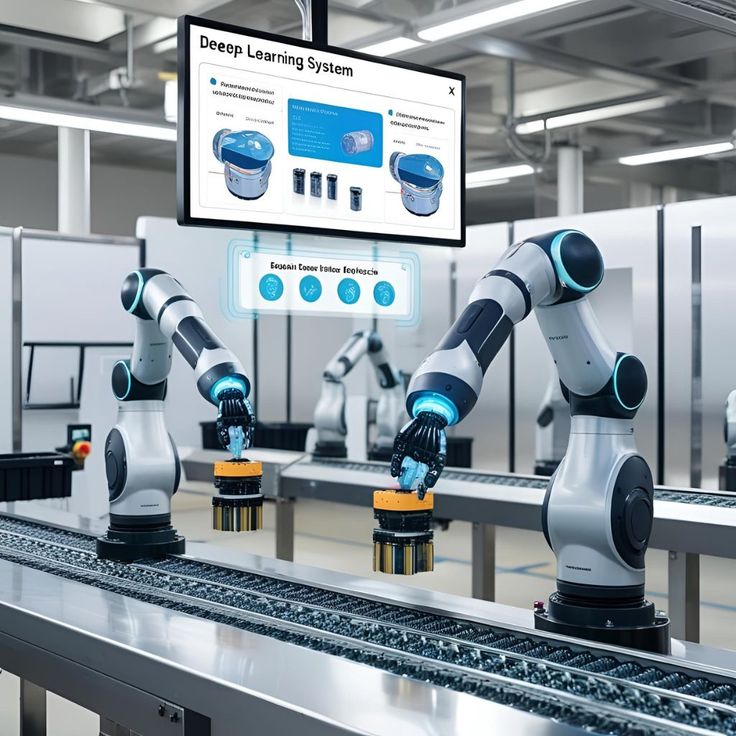
Ask most plant managers what their biggest quality cost actually is, and it's rarely the inspection process itself, it's the defects that slip past inspection and only surface after a customer complaint. AI-powered quality control for manufacturing exists specifically to close that gap: catching the defects human eyes get tired of looking for, at a speed and consistency that shift-based manual inspection was never built to sustain.
This isn't about replacing your QC team. It's about giving them a tool that never gets tired on the third shift, never has an off day, and flags the same defect the same way every single time. The AI quality control manufacturing plants are rolling out today looks less like a research project and more like an everyday production tool. Here's how it actually works, what it takes to set up properly, and where it fits alongside the inspectors you already have.
Why Manual QC Hits a Ceiling
Manual visual inspection works well up to a point. Trained inspectors catch a lot, especially with obvious defects. But visual inspection performance drops measurably over the course of a shift, and it varies from one inspector to another even on the same day. Add in the pressure of hitting production targets, and inspection speed sometimes wins out over inspection thoroughness, not because anyone's careless, but because people get tired and rushed.
The defects that get through usually aren't the big obvious ones. They're the marginal cases: a hairline crack, a slightly off tolerance, a surface finish that's borderline. Those are exactly the kind of defects that AI-powered visual inspection is built to catch consistently, because it doesn't fatigue and it applies the same threshold every single time.
Common limitations of manual visual QC:
• Inspector fatigue over long shifts
• Variation between inspectors
• Pressure to maintain production speed
• Difficulty spotting marginal defects consistently
• Repetitive inspection work
• Defects escaping into later production or customer delivery
What AI-Powered Quality Control Actually Means
In practice, most AI quality control for manufacturing setups combine machine vision with a trained inspection model, and sometimes predictive analytics layered on top of production data.
Machine Vision Inspection
Cameras positioned along the production line capture images of every unit, or a statistically meaningful sample, as it moves through inspection. A trained computer vision model analyzes each image against learned patterns of acceptable and defective output, flagging anything outside tolerance in real time. This works well for surface defects, dimensional checks, assembly verification, and presence-or-absence checks, and it runs at line speed rather than slowing production down for manual spot checks.
Predictive Quality Models
A second layer, less visible but increasingly common, uses production data such as machine parameters, temperature, cycle times, and material batch data to predict quality issues before a defect physically occurs. If a specific combination of machine settings has historically correlated with higher defect rates on a particular part, the system can flag that risk in advance rather than catching the problem only after inspection.
Where AI Fits Alongside Human Inspectors
The most effective AI QC deployments don't remove human inspectors, they change what those inspectors spend their time on. Instead of checking every single unit for common, obvious defects, trained staff review the cases the system flags as uncertain or borderline, along with a smaller statistical sample of units it passed, to keep the model honest over time. That's usually a better use of experienced inspection staff than repetitive checks the system already handles reliably on its own.
Human inspectors can focus more on:
• Reviewing uncertain or borderline cases
• Investigating recurring defects
• Root-cause analysis
• Validating AI inspection results
• Handling quality exceptions
• Improving inspection and production processes
How This Actually Runs on the Shop Floor
A typical setup starts with cameras or sensors installed at one or more inspection points on the line, feeding into a vision system trained on a labeled dataset of your own products, both good units and known defect types. That training step matters more than the hardware; a vision model trained on someone else's generic dataset will underperform badly compared to one trained on images of your actual parts, lighting conditions, and defect types.
Once live, flagged units get routed for human review or automatic rejection depending on how the system is configured, and the results feed back into your existing quality management data, whether that's a QC module inside your ERP or a standalone quality system.
What It Actually Takes to Get This Right
The honest answer is that most of the effort in an AI QC project goes into data and calibration, not software. You need a reasonable volume of labeled images covering both acceptable output and every defect type you want the system to catch, ideally collected under the actual lighting and camera positioning used in production, not a lab setup. Skipping this step is the most common reason AI QC pilots underperform: a model trained on a couple hundred curated sample images behaves very differently once it's looking at real production line conditions with dust, vibration, and inconsistent lighting.
Expect a calibration period after go-live too. The first few weeks typically involve reviewing flagged units closely, adjusting sensitivity thresholds, and occasionally retraining the model on edge cases it initially got wrong. Treating this as a one-time setup rather than an ongoing tuning process is where a lot of deployments stall.
Key requirements for an AI QC deployment:
• Labeled images of good products
• Examples of known defect types
• Production-environment image capture
• Appropriate camera positioning and lighting
• Sensitivity and rejection thresholds
• Human review of edge cases
• Ongoing model calibration and retraining
The Questions Plant Managers Usually Ask
What Does It Cost?
Cost is the first concern, and it's a fair one: camera hardware, integration work, and model training aren't free, though the cost has come down substantially over the last few years and doesn't require the kind of capital investment industrial robotics once did.
What Happens to Existing QC Staff?
The second is job security for existing QC staff, and in practice most deployments redeploy inspectors toward reviewing edge cases and root-cause investigation rather than eliminating the role, since someone still needs to decide what happens when the system isn't confident.
How Accurate Is It?
Accuracy is the third, and it depends entirely on training data quality; a well-trained system on a stable, well-lit production line can outperform human inspection consistency, but it isn't magic, and defect types the model has never seen won't be reliably caught until it's retrained on examples of them.
Three practical questions to answer before deployment:
• What are defect escapes currently costing the plant?
• Which inspection tasks are most repetitive or difficult to scale?
• Does the production environment provide enough data to train and validate the model?
Where This Fits Into a Bigger Quality Picture
AI quality control works best when it's connected to the rest of your quality and production data rather than running as an isolated system. Defect data flowing back into your ERP's quality module means recurring issues on a specific machine, shift, or material batch become visible in reporting rather than staying anecdotal knowledge that lives in one supervisor's head. That connection is also what makes the predictive layer useful over time, since patterns only show up once enough data has accumulated across production runs.
Starting Without a Full Line Overhaul
You don't need to instrument an entire production line on day one. Most successful rollouts start with a single inspection point, often the one with the highest defect rate or the one most dependent on a single experienced inspector's judgment, prove the model's accuracy against your existing QC process over a few weeks, then expand from there. This keeps the initial investment manageable and gives you real performance data before committing to a wider rollout.
A practical AI QC rollout can look like:
• Select one high-value inspection point
• Collect production-quality training data
• Train and calibrate the inspection model
• Run AI inspection alongside existing QC
• Compare results over several weeks
• Refine thresholds and edge-case handling
• Expand to additional lines or inspection points
How Long Before It Pays for Itself
The payback period depends heavily on what defect escapes are currently costing you, but most plants running a focused pilot on a single high-defect line see the system pay for itself within the first several months once returns, rework, and warranty claims tied to that specific defect category start dropping. The calculation is usually simpler than plant managers expect: take the cost of a typical defect escape, whether that's a warranty claim, a customer return, or scrapped material, and multiply it by how many of those the system is realistically expected to catch that manual inspection was missing.
Where the numbers get harder to pin down is the softer benefits: inspectors freed up for higher-value root-cause work, faster feedback to the line when a machine starts drifting out of tolerance, and quality data that's actually reliable enough to act on instead of being a monthly guess. Most plants don't try to quantify those precisely upfront. They start with the hard defect-cost numbers to justify the pilot, then use the pilot results to build the case for expanding to additional lines.
Start the business case with measurable costs such as:
• Customer returns
• Warranty claims
• Scrap and material loss
• Rework costs
• Defect escapes
• Inspection time spent on repetitive checks
Ready to Explore AI-Powered Quality Control?
If defect escapes are costing you more in returns and rework than they should, or your QC team is stretched thin across multiple lines, let's look at what an AI-powered inspection pilot could look like on your actual production floor.
We'll help identify the right inspection point, data requirements, machine-vision approach, integration needs, and practical rollout path for your manufacturing environment.
Talk to our AI team and get a practical view of how AI-powered quality inspection could fit into your existing QC process.
Talk to Our AI Team