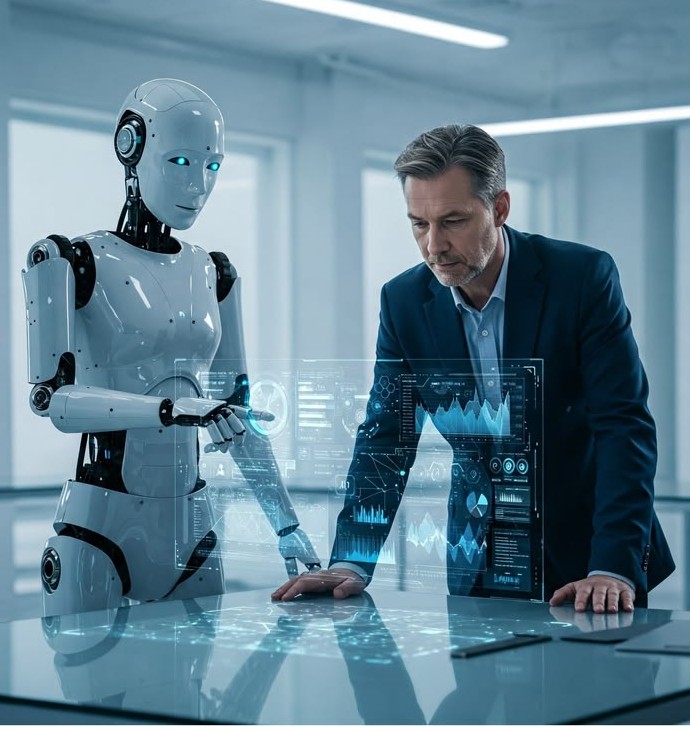
Future of ERP: How AI and Automation Are Reshaping Business Software
The future of ERP software is being rewritten right now — and the companies paying attention are already pulling ahead.
For decades, ERP systems were powerful but passive. You fed them data, they stored it, and your team made sense of it manually. That era is ending.
Today, AI and automation are transforming ERP from a record-keeping tool into a system that thinks, predicts, and acts on your behalf.
Whether you run a manufacturing plant, a transport fleet, or a growing service business, understanding how ERP is evolving could be one of the most important business decisions you make this year.
At Sunray Datalinks, we help businesses leverage Odoo ERP, AI, and automation technologies to streamline operations, improve decision-making, and gain a competitive edge.
What's Actually Changing in ERP Software?
Traditional ERP systems were built around three things: data entry, reporting, and workflow automation.
While effective, these systems still relied on employees to interpret information, identify trends, and make operational decisions.
The new generation of ERP software—particularly platforms like Odoo enhanced with AI—changes this model entirely.
Instead of simply telling you what happened, modern ERP systems tell you what is likely to happen and what actions should be taken next.
Key Innovations Reshaping ERP Software
1. Predictive Analytics Built Into Core Modules
Older ERP systems focused primarily on historical reporting. Modern ERP platforms integrate machine learning directly into inventory, sales, procurement, and production modules.
This allows businesses to anticipate stock shortages, supplier delays, production bottlenecks, and demand fluctuations before they become operational problems.
For manufacturers, predictive analytics reduces emergency purchases, improves planning accuracy, and keeps production schedules running smoothly.
2. Agentic AI: ERP That Acts, Not Just Reports
One of the most significant developments in ERP is Agentic AI.
Unlike traditional AI that only provides recommendations, Agentic AI can take actions autonomously based on predefined rules and learned patterns.
Within an ERP environment, this could include automatically generating purchase orders, rerouting delayed shipments, assigning production tasks, or sending customer follow-ups without human intervention.
At Sunray Datalinks, we build Agentic AI workflows on top of Odoo ERP for manufacturing, logistics, and distribution businesses, helping clients automate repetitive operational tasks while improving accuracy and responsiveness.
3. Natural Language Interfaces
ERP systems are becoming easier to use through natural language interfaces.
Instead of navigating complex reports, users can simply ask questions such as:
"What was our average production downtime this quarter?" or "Which products generated the highest margin last month?"
The ERP system interprets the question and provides a clear, data-driven answer instantly.
This dramatically improves ERP adoption among non-technical users.
4. Hyperautomation Across Departments
Hyperautomation combines AI, workflow automation, and robotic process automation (RPA) to automate entire business processes from start to finish.
For example, a customer order can automatically trigger inventory checks, production scheduling, delivery planning, invoicing, and customer notifications—all without manual intervention.
What was once only possible for large enterprises is now accessible to mid-sized businesses through modern ERP platforms.
The Future of ERP Software: What Comes Next?
Industry experts consistently identify several emerging trends that will define ERP systems over the next three to five years.
1. AI-Generated Insights in Real Time
Future ERP systems will continuously monitor business data and proactively surface opportunities, risks, and anomalies.
Rather than waiting for monthly reviews, businesses will receive actionable recommendations as events occur.
2. Integration With IoT and Smart Devices
Manufacturers are increasingly connecting ERP systems directly to machinery and equipment through IoT sensors.
Machine performance, maintenance requirements, and production output can be tracked automatically and reflected within the ERP system in real time.
This creates a seamless connection between operational activity and business intelligence.
3. Composable ERP Architecture
Businesses are moving away from monolithic ERP systems toward modular architectures.
Companies can deploy only the modules they need and add functionality as they grow.
Odoo has been a leader in this approach, offering more than 80 business modules that can be implemented incrementally.
4. Mobile-First ERP Access
The workforce is increasingly mobile, and future ERP systems are being designed accordingly.
Sales representatives, warehouse staff, service technicians, and drivers require full ERP functionality directly from smartphones and tablets.
Mobile-first ERP platforms ensure users can access critical information and complete tasks from anywhere.
Why Indian SMEs Should Act Now
Many business owners still assume AI-powered ERP systems are only practical for large enterprises with substantial budgets.
Today's reality is very different.
Platforms like Odoo, combined with affordable AI technologies, allow businesses with as few as 20 employees to implement intelligent ERP solutions cost-effectively.
As labour costs rise, customer expectations increase, and competition intensifies, businesses that automate strategically today will gain a significant competitive advantage tomorrow.
At Sunray Datalinks, we help SMEs across manufacturing, logistics, transport, automotive, cosmetics, and distribution sectors implement Odoo ERP solutions enhanced with practical AI capabilities tailored to their specific operational needs.
What to Look for When Evaluating Modern ERP Systems
When assessing ERP solutions, businesses should prioritise capabilities that support long-term scalability and innovation.
- AI and machine learning capabilities built directly into the platform.
- Open APIs for integration with WhatsApp, payment gateways, logistics systems, and IoT devices.
- A mobile-first user experience across Android and iOS devices.
- Modular architecture that allows incremental implementation and expansion.
- A strong implementation partner with industry expertise and local support.
Odoo delivers each of these capabilities, making it one of the most future-ready ERP platforms available today.
As a certified Odoo implementation partner, Sunray Datalinks helps businesses configure, customise, and deploy ERP systems that align precisely with their industry requirements and operational workflows.
The Bottom Line
ERP software is entering a new era driven by artificial intelligence, automation, and real-time decision-making.
Businesses that embrace these technologies today will benefit from greater efficiency, improved visibility, reduced operational costs, and stronger competitive positioning.
The future ERP system won't simply store data—it will actively help businesses predict challenges, automate workflows, and make smarter decisions.
For organisations seeking sustainable growth, modern AI-powered ERP platforms represent one of the most impactful technology investments available.
Ready to Future-Proof Your Business with AI-Powered ERP?
Discover how intelligent ERP solutions can automate operations, improve decision-making, and unlock new growth opportunities.
Our experts can evaluate your existing processes and recommend the right ERP and AI strategy for your business.
Let's discuss how Odoo ERP, AI, and automation can transform your operations and prepare your business for the future.
Book Free Consultation