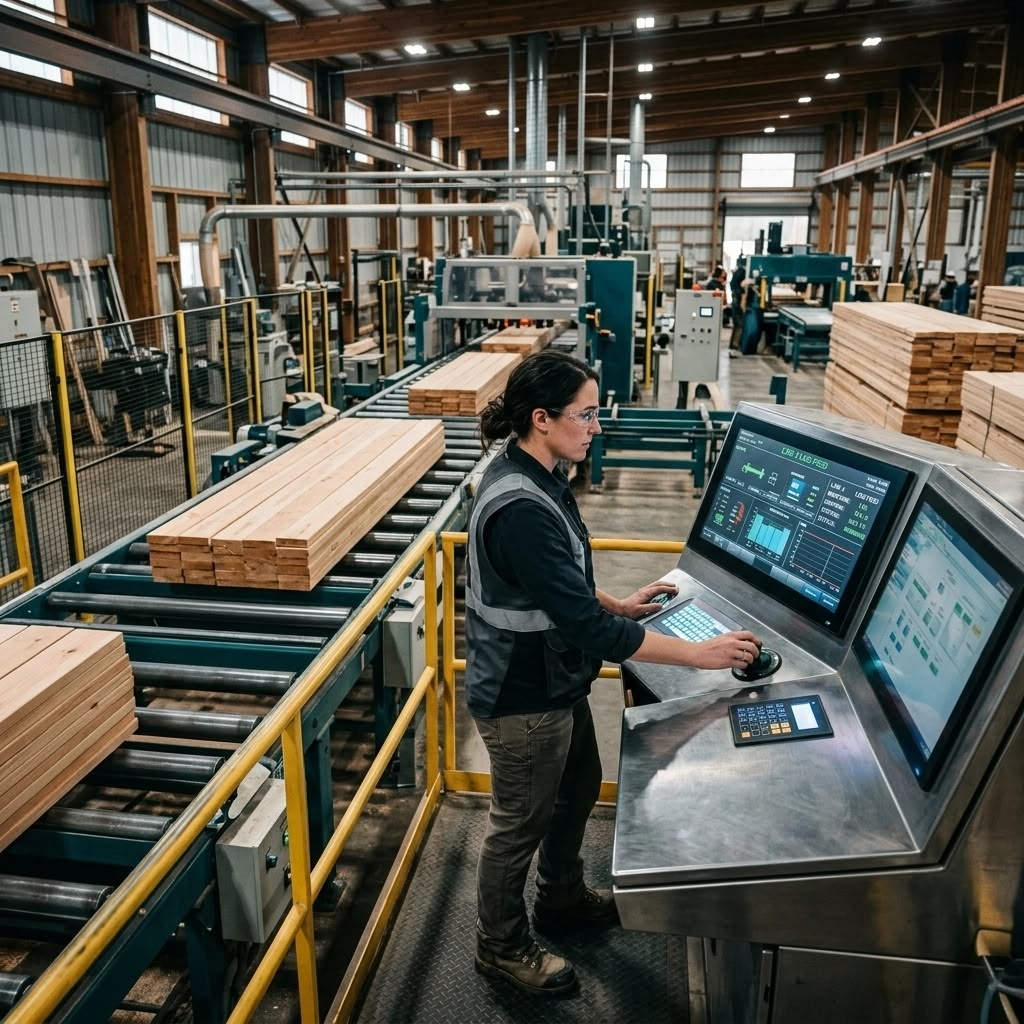
The Real Challenges in Plywood Manufacturing
Before getting into features, it's important to clearly understand the real problems plywood manufacturers face on a daily basis.
In most plants, operations still rely heavily on manual tracking and disconnected systems, leading to inefficiencies and lack of visibility.
- Raw material tracking is manual — logs, veneer sheets, and adhesives are tracked in registers or Excel
- Production losses are estimated — wastage figures are based on assumptions, not actual data
- Grade-wise inventory is difficult to manage — multiple grades require structured tracking
- Dispatch and lorry management is chaotic — loading and documentation are manual
- Finance lacks real-time visibility — decisions are based on outdated data
Core Features a Plywood ERP Must Have
1. Log and Timber Procurement Tracking
Everything starts with procurement. A proper system tracks timber logs from entry — including species, diameter, length, supplier, and purchase cost.
This ensures accurate cost calculation per cubic metre and connects directly to production costing.
2. Veneer Production and Grade Tracking
The veneer stage is where most data loss happens. A good ERP tracks output per log and records grade distribution (A, B, C).
It also connects moisture readings and drying cycles to production data.
3. Multi-Stage Production Management
Plywood manufacturing involves multiple stages — core preparation, gluing, pressing, trimming, sanding, and grading.
Each stage must track material usage, machine time, output, and rejections.
4. Finished Goods Inventory Management
Plywood inventory includes multiple sizes, thicknesses, and grades. A flat inventory system cannot handle this complexity.
An ERP must provide specification-wise stock visibility for accurate dispatch and sales commitments.
5. Order Management and Dispatch Planning
Customer orders often require specific sizes and grades. The system should match orders with available stock and plan dispatch efficiently.
It should also generate loading sheets and support transport documentation like e-way bills.
6. Wastage and Yield Reporting
This is one of the most critical capabilities. The ERP should track input vs output at every stage.
It provides insights into wastage by machine, operator, and process.
7. Accounts Integration with Production
Production data must flow directly into financial systems to calculate real-time cost of goods sold.
This enables accurate margin analysis without waiting for month-end reports.
What About Standard ERP Like Tally or Odoo?
Basic tools like Tally handle accounting well but lack production tracking capabilities.
Standard Odoo modules support manufacturing but do not fully cover plywood-specific workflows like veneer grading and multi-stage yield tracking.
Implementation Timeline
A complete plywood ERP implementation typically takes 8–12 weeks depending on complexity, users, and integrations.
- Phase 1: Accounting and inventory setup
- Phase 2: Production management
- Phase 3: Dispatch and reporting
Take the First Step
Get a free consultation to identify improvement areas and build a clear digital roadmap for your plywood manufacturing business.
Get a Free Consultation