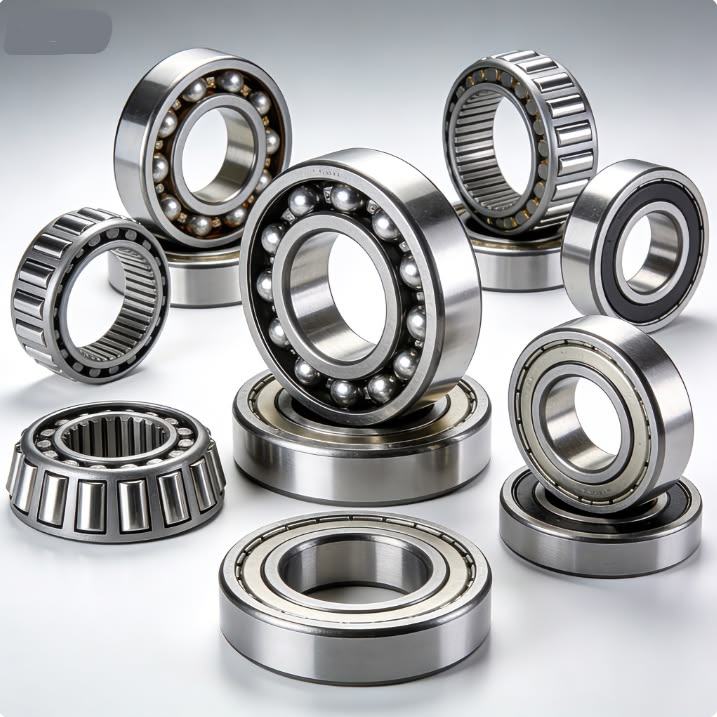
Bearing distribution is a business built on precision at scale. A single distributor can carry thousands of SKUs across bore sizes, brands, and bearing types, where a single-digit mix-up in part number can mean the wrong bearing lands on a customer's production line. This bearing distributor ERP SKU management case study looks at how a mid-size distributor went from spreadsheet-driven chaos to tracking over 5,000 SKUs with zero picking errors, using a custom ERP built specifically around how bearing distribution actually works.
The Client
The client is a bearing distributor supplying industrial bearings, bushings, and related components to manufacturing units across multiple states. For confidentiality, we're referring to them here as a composite profile representative of the bearing distribution businesses we've worked with, rather than naming a specific company. Details in this case study reflect real patterns and outcomes seen across similar implementations.
The distributor stocks bearings from several major brands, spanning a huge range of bore diameters, outer diameters, and specifications, the kind of catalogue where two SKUs can look nearly identical on paper but are completely incompatible in application.
The Challenge
Before implementation, the distributor was managing their SKU catalogue across a combination of Excel spreadsheets and a basic, generic inventory tool that wasn't built with bearing-specific attributes in mind. Products were often identified primarily by a short internal code, with detailed specifications, bore size, outer diameter, width, brand, sitting in a separate reference sheet that staff had to cross-check manually during picking and order confirmation.
This created a slow, error-prone process. Picking staff would occasionally select a bearing with the correct internal code but the wrong brand variant, since two different brands sometimes shared very similar external dimensions but different tolerances or load ratings. Sales staff quoting stock availability over the phone were often working from data that was hours or days out of date, since the spreadsheet update process wasn't real-time. And month-end stock reconciliation regularly turned up discrepancies that took days to trace back to their source.
What They Tried Before
The distributor had previously attempted to solve this with a generic off-the-shelf inventory management tool, one designed for general retail and wholesale use rather than for a catalogue with the specific technical attributes bearings require. It handled basic stock-in and stock-out tracking reasonably well, but had no clean way to search or filter by bearing-specific fields like bore size or load rating, forcing staff to keep relying on the separate spreadsheet reference alongside the software rather than replacing it.
The result was two systems running in parallel, neither fully trusted, with staff often defaulting back to phone calls to the warehouse to physically confirm stock before committing to a customer order. This defeated much of the purpose of having inventory software in the first place.
The Solution: A Custom ERP Built for Bearing Distribution
Working with Sunray Datalinks, the distributor moved to a custom Odoo-based ERP configured specifically around bearing distribution's technical attributes. Rather than treating each SKU as a generic inventory item, every product record was built to carry the full technical specification, bore diameter, outer diameter, width, brand, bearing type, and tolerance class, as structured, searchable fields rather than notes in a separate sheet.
This meant staff picking, quoting, or reconciling stock could search and filter directly by any of these technical attributes inside the ERP itself, with no need to cross-reference a separate spreadsheet. A sales team member could pull up every available bearing matching a specific bore size and load rating in seconds, with current stock quantity shown live rather than from a periodically updated file.
Barcode-based picking was introduced alongside this, so warehouse staff scanning a bin location and product barcode would get an immediate on-screen confirmation if the scanned item didn't match the order line, catching brand or specification mismatches at the point of picking rather than after the bearing had already shipped to a customer.
The custom ERP approach focused on three core capabilities:
• Structured bearing-specific product attributes
• Real-time inventory visibility across the catalogue
• Barcode validation at the point of picking
Rolling It Out Across the Warehouse
Implementation started with a full SKU data cleanup, since the existing spreadsheet-based catalogue had years of inconsistent naming conventions and, in some cases, duplicate entries for what were actually the same product under slightly different internal codes. This data cleanup phase took longer than the software configuration itself, but was the step that made the rest of the rollout succeed, since a technically excellent ERP running on messy underlying data would have simply digitized the same errors.
Warehouse staff were trained on barcode scanning workflows over a two-week period, running in parallel with the old process initially so nothing broke during the transition. Once confidence was established, the distributor moved fully onto the new system.
Results
The most immediate and measurable outcome was picking accuracy. Within the first quarter after go-live, picking errors, cases where the wrong SKU or wrong brand variant was shipped against an order, dropped to effectively zero, compared to what had previously been a regular, low-grade problem the team had come to consider normal.
Order quoting speed improved as well. Sales staff could confirm exact stock availability by technical specification in seconds rather than needing to call the warehouse or check a static spreadsheet that might already be outdated. Month-end stock reconciliation, previously a multi-day process of manually tracing discrepancies, became a same-day task, since the ERP maintained a single, real-time source of truth for stock levels rather than two competing systems.
Beyond the headline numbers, the distributor also saw a meaningful drop in customer-reported discrepancies, cases where a customer received a bearing that didn't match what they'd ordered, or where a promised quantity turned out to be short once the shipment was actually opened. These issues had previously been treated as an unavoidable cost of doing business at this scale. Once picking accuracy improved, that category of customer complaint dropped sharply enough that the customer service team noticed the change without needing to look at a report.
Staff time freed up by faster reconciliation and fewer error investigations also got redirected. The person who had previously spent a significant part of each month tracing stock discrepancies back to their source moved into a more proactive inventory planning role, reviewing slow-moving stock and flagging candidates for clearance rather than just firefighting data problems.
What the Operations Manager Said
"We didn't fully realize how much time we were losing to double-checking everything until we stopped needing to. The barcode confirmation alone paid for itself within the first couple of months just in reduced returns and re-shipments."
"The bigger surprise was on the sales side. Our team can now tell a customer exactly what's available, in the right brand and spec, without putting them on hold to go check. That responsiveness has actually helped us win business from customers who were tired of waiting on competitors."
Why This Matters for Other Bearing and Component Distributors
Bearing distribution isn't unique in facing this challenge, any distributor carrying a large catalogue of visually similar, technically distinct SKUs, fasteners, seals, valves, electrical components, runs into the same fundamental risk. Generic inventory software that treats every product as an interchangeable line item misses the technical attributes that actually differentiate one SKU from another in these industries, and that gap tends to show up exactly where it hurts most: at the picking bench, in a rushed order confirmation, or during a month-end reconciliation nobody wants to do twice.
Where This Fits Into a Broader Distribution ERP Setup
SKU management with this level of technical detail works best as part of a fully connected distribution ERP, one where accurate stock data feeds directly into sales quoting, purchase reordering, and accounts, rather than sitting as an isolated inventory fix. For this distributor, the same technical attribute data used for picking accuracy also now feeds automated reorder rules, ensuring purchase requests are raised against the correct brand and specification rather than a generic SKU code that could be interpreted multiple ways.
A connected distribution ERP can link SKU data across:
• Inventory and warehouse operations
• Sales quotations and order processing
• Purchase reordering
• Barcode-based picking
• Accounts and invoicing
• Demand planning and forecasting
Lessons From the Rollout
A few things stood out as genuinely important to how well this implementation landed. First, the data cleanup phase deserved the time it took, rushing straight to software configuration on top of messy legacy data would have undermined the entire project.
Second, running the barcode system in parallel with the old process for a transition period, rather than switching over all at once, gave staff room to build trust in the new system without the pressure of a hard cutover.
Third, involving warehouse staff directly in defining which technical fields actually mattered for picking accuracy produced a more useful data structure than an IT-only decision would have.
Timeline and Investment
The full implementation, including the SKU data cleanup, technical field configuration, barcode integration, and staff training, ran over roughly ten weeks from kickoff to full go-live. Investment scaled with catalogue size and the extent of barcode hardware needed across the warehouse, and the distributor considered the picking accuracy and reconciliation time savings alone sufficient to justify the cost within the first two quarters of operation.
How the SKU Data Structure Was Actually Designed
One detail worth calling out for other distributors considering something similar is how the technical attribute fields were designed. Rather than starting from a generic ERP template and bolting on custom fields as an afterthought, the process began with the warehouse and sales teams mapping out every attribute they actually referenced when identifying a bearing in daily work, bore diameter, outer diameter, width, brand, bearing type, tolerance class, and in some cases, specific application notes for bearings used in higher-load or high-temperature settings.
That list became the backbone of the product data model. Each field was set up as a structured, filterable attribute rather than free text, which is what made the search and filter functionality genuinely fast and reliable rather than just a marginally better version of a text search. This upfront investment in getting the data model right, rather than defaulting to whatever fields a generic template happened to include, is a big part of why the search experience for staff felt like a real improvement rather than a cosmetic one.
Core structured SKU attributes included:
• Bore diameter
• Outer diameter
• Width
• Brand
• Bearing type
• Tolerance class
• Application-specific notes where required
Handling the Inevitable Exceptions
No SKU catalogue is perfectly clean even after a thorough data migration, and this implementation was no exception. A small number of products didn't fit neatly into the standard attribute structure, older or discontinued bearing variants with incomplete specification data, or supplier-specific part numbers that didn't map cleanly to a standard bore and diameter combination.
Rather than forcing these into the standard structure and risking inaccurate data, these were flagged as a distinct category requiring manual verification before sale, which kept the overall data quality high rather than allowing a handful of messy records to undermine confidence in the system as a whole.
This kind of deliberate handling of edge cases, rather than either ignoring them or forcing a one-size-fits-all structure onto every product, is often what separates an ERP rollout that staff trust from one they quietly work around.
Looking Ahead
With accurate, structured SKU data now the foundation of their ERP, the distributor is exploring extending this same approach to demand forecasting, using historical order patterns by technical specification to fine-tune reorder thresholds further, an extension that becomes realistic specifically because the underlying data is now clean and structured rather than scattered across spreadsheets.
Key Takeaways
For any distributor carrying a large, technically detailed SKU catalogue, the core lesson here is that generic inventory software eventually hits a ceiling. The real fix isn't more spreadsheets or more manual cross-checking, it's an ERP configured around the specific technical attributes that actually define your products, paired with a data cleanup effort that most businesses underestimate the value of until they've done it.
Ready to Build an ERP Around Your Bearing Distribution Business?
Let us review your current SKU structure, inventory workflows, warehouse processes, barcode requirements, sales operations, and recurring stock discrepancies.
We'll identify where a custom ERP can improve SKU accuracy, picking reliability, real-time stock visibility, purchasing, and day-to-day warehouse operations.
Book a free consultation and get a practical view of how an ERP configured around your technical product data can help your distribution business scale with greater accuracy and control.
Book Free Consultation