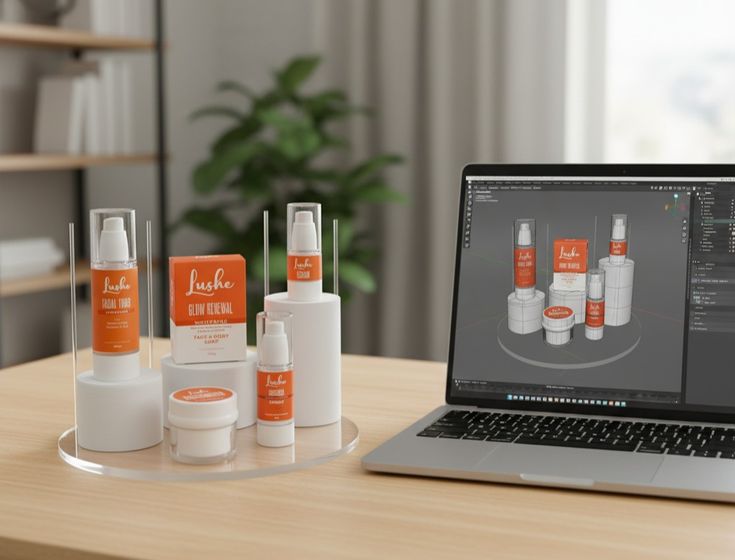
Cosmetic Brand Cuts Batch Recall Time from 3 Days to 4 Hours with Odoo
In cosmetic manufacturing, product quality and traceability are more than operational priorities—they're essential for consumer safety, regulatory compliance, and brand reputation. When a supplier identifies a potential issue with a raw material, manufacturers must quickly determine which finished products are affected, where they have been shipped, and what action is required.
For one cosmetic manufacturer in Gujarat, that process once relied entirely on paper records. Tracing a single raw material lot across production batches and customer shipments required days of manual cross-checking, delaying critical decisions during quality incidents.
By implementing Odoo Manufacturing and Quality with complete lot and serial traceability, the company transformed its quality management process—reducing batch recall trace time from three days to less than four hours, improving recall accuracy, and eliminating paper-based quality records across all production lines.
At a Glance
✓ Batch Recall Trace Time: 3 Days → Under 4 Hours
✓ Traceability: 100% raw material to finished goods visibility
✓ Recall Scope: 60% reduction in over-recall scope
✓ Quality Control: 3 production lines now fully paperless for QC
Client Overview
The client is a growing cosmetic manufacturer producing skincare and personal care products from a single manufacturing facility in Vapi, Gujarat. The plant operates three production lines and manufactures approximately 180 finished goods batches every month, supplying products across multiple skincare and personal care SKUs.
To improve production visibility, quality control, and regulatory compliance, the company implemented Odoo Manufacturing and Odoo Quality with complete lot and serial traceability throughout the manufacturing process.
Industry: Cosmetic Manufacturing (Skincare and Personal Care)
Location: Vapi, Gujarat
Facility: Single Plant, 3 Production Lines
Monthly Batches: Roughly 180 Finished Goods Batches Across Skincare and Personal Care SKUs
Solution: Odoo Manufacturing and Quality with Full Lot and Serial Traceability
The Challenge: A Quality Flag Nobody Could Trace Fast Enough
This company runs a single plant producing skincare and personal care products across roughly 180 finished goods batches a month. Batch manufacturing records were kept on paper, one register for raw material receipts, another for production batches, and a separate dispatch log. Each linked to the others only if someone manually cross-referenced batch numbers by hand.
That worked fine until a supplier flagged a quality issue with one lot of a preservative used across several product lines. The plant needed to know, fast, exactly which finished goods batches contained that raw material lot and where those batches had shipped. Pulling that answer meant three people going through paper registers page by page, matching raw material lot numbers against production dates against dispatch records. It took three days to get a confident answer.
Quality Head:
"We knew something was wrong on day one. It took us three more days to know exactly what to do about it. In a recall situation, those three days are the ones that matter most."
During that gap, the plant erred on the side of caution and pulled a wider batch range than turned out to be necessary once the full trace was finally complete, an understandable call under pressure, but an expensive one.
The Specific Issues They Needed to Solve
✓ No digital link between raw material lot numbers and finished goods batch numbers, only paper records requiring manual cross-referencing
✓ Recall scope decided under time pressure, usually erring toward pulling more stock than the data would have actually required
✓ QC checkpoints recorded on paper forms filed after the shift, not searchable or reviewable while an issue was active
✓ No fast way to answer which customers had received stock from a specific batch without manually checking dispatch registers
✓ Regulatory and customer audits required days of document pulling before anyone could even sit down with an inspector
Why Traceability Isn't Optional in Cosmetic Manufacturing
Cosmetic products sit closer to consumer safety regulation than most manufactured goods, closer to pharma than to general FMCG in terms of what a regulator or a major retail buyer expects to see during an audit. A brand that can't produce a clean genealogy for a batch within hours, not days, is exposed twice over: once to the actual product risk, and again to the reputational cost of a slow, uncertain response once a recall becomes public. Retail buyers increasingly ask for traceability documentation as part of vendor onboarding, not just during an incident.
Example: When a retail customer asks for complete documentation for a specific cosmetic batch, a digitally traceable operation can retrieve the relevant production and quality history quickly instead of manually assembling records from multiple registers.
The Solution: End-to-End Batch Traceability Inside Odoo
Sunray Datalinks implemented Odoo Manufacturing and Quality with full lot and serial tracking running from raw material receipt through to finished goods dispatch, replacing the paper batch registers with data captured directly on the production floor.
Rather than simply digitising paper records, the implementation connected raw material receipts, production orders, quality checkpoints, finished goods, and customer dispatches into one continuous traceability workflow.
1. Lot Tracking From Goods-In to Dispatch
Every raw material lot gets a unique lot number the moment it's received into Odoo, and that number stays attached automatically through every manufacturing order that consumes it, all the way to the finished goods batch and the customer order it eventually ships against. Nobody re-enters a lot number by hand at any stage after the initial goods receipt.
Example: A preservative received under a specific supplier lot is consumed across several manufacturing orders.
The quality team can later identify every finished goods batch and customer shipment connected to that raw material lot without reviewing paper records or manually matching production dates.
2. QC Checkpoints Built Into the Production Flow
Quality checks happen on a tablet at the point of work, including incoming raw material inspection, in-process checks, and pre-dispatch release. Each check is timestamped and attached directly to the batch record in Odoo Quality.
A check that used to sit on a clipboard until someone filed it at the end of the shift is now part of the batch's permanent record the moment it's completed.
Example: An operator completes an in-process QC check on a tablet directly from the production floor.
The result is immediately attached to the relevant batch record, allowing supervisors and quality managers to review the information without waiting for paper forms to be collected and filed.
3. Instant Genealogy Lookup
A single batch number search now surfaces the complete genealogy: which raw material lots went into it, which QC checks it passed, and which customer orders it shipped against, all in seconds. What used to mean pulling three separate paper registers and manually matching entries is now one search.
Example: A customer reports a potential issue with one finished goods batch.
The quality manager can quickly identify the raw materials used, review the QC history, confirm the production record, and see which customer orders received stock from that batch.
4. Automatic Recall Scoping
When a raw material lot gets quarantined, Odoo's traceability automatically surfaces every finished goods batch that actually used it, and only those batches. Recall decisions stop being a judgment call made under pressure and become a filtered report the quality team can act on immediately.
Example: A supplier places one preservative lot under investigation.
Rather than pulling every product manufactured during the same period, the quality team can identify the finished goods batches actually connected to the affected raw material lot and act on that defined scope.
Implementation: 10 Weeks, Line by Line
The rollout was phased to avoid disrupting active production runs on a plant that couldn't afford downtime. Each phase focused on validating the process before extending the workflow across the remaining production lines.
Weeks 1–2
Production processes were mapped stage by stage on the factory floor, and the lot numbering scheme was designed around the plant's actual raw material and SKU structure.
Weeks 3–5
Odoo Manufacturing and Quality were configured, with tablet-based QC checklists built to match the plant's existing SOPs rather than a generic template.
Weeks 6–7
A pilot was launched on one production line, with operators trained on tablet-based batch entry and QC recording.
Weeks 8–10
The workflow was rolled out across all three lines, open batch data was migrated from the paper system, and a two-week supported transition period was completed.
Implementation Insight:
The single-line pilot surfaced two gaps in the original lot numbering scheme, mostly around how sub-assemblies and rework batches were tracked, while the cost of fixing them was still small.
Training focused heavily on shift supervisors first, since they were the people who would ultimately troubleshoot tablet issues and support operators once the plant was live across all three lines.
Results: Four Months After Go-Live
Four months after implementation, the manufacturer had measurable improvements across traceability, quality control, audit readiness, and production documentation.
✓ Batch recall trace time: Dropped from roughly three days to under four hours, confirmed against a real quality flag that came in two months after go-live.
✓ Recall scope accuracy: Improved by 60%, meaning fewer unaffected batches are pulled out of caution when an issue occurs.
✓ QC checkpoint compliance: Now visible in real time across all three lines instead of being discovered during a month-end paper review.
✓ Audit preparation: Reduced from several days of document pulling to under one day.
✓ Paper batch registers: Zero remain in active use across the plant's three production lines.
The plant's next major retail account audit, conducted six weeks after go-live, was the first in the company's history where the auditor's document requests were answered from live system reports rather than a scramble to locate paper files beforehand.
Quality Head:
"The four-hour trace wasn't a stress test, it was a real flag from a real supplier. We had our answer, with the exact batch list, before we'd normally have finished pulling the paper registers off the shelf."
What Made the Difference
The results came from more than replacing paper with software. Four practical changes made the biggest difference to the plant's traceability and quality workflow.
✓ Traceability by default, not by request: Because lot data captures automatically during production, nobody has to remember to log it for it to be available when needed.
✓ Tablets over paper: Real-time capture at the point of work mattered more for QC than any dashboard feature because a check logged when it happens is less likely to be lost or backfilled inaccurately later.
✓ Data over judgment calls: Replacing "when in doubt, pull more" with a scoped answer meant less unnecessary product write-off during the recall tested so far.
✓ Phased rollout: Piloting on a single line first caught numbering gaps while the cost of fixing them was still small, before all three lines depended on the same scheme.
When a Quality Issue Hits, How Fast Can You Trace It?
If your batch records still live on paper and a recall would mean days of manual cross-referencing before you even know the scope of the problem, that's exactly the gap Odoo's traceability is built to close.
With end-to-end lot tracking, digital QC checkpoints, instant batch genealogy, and automatic recall scoping, manufacturers can move from manual investigation to a clear, data-driven response.
Download the Full Case Study or Book a Free Demo
See how Odoo Manufacturing and Quality can replace paper-based batch records with complete digital traceability across raw materials, production, quality checks, finished goods, and customer shipments.
Learn how digital batch genealogy and automated recall scoping can help your manufacturing business improve compliance, reduce operational risk, and respond faster when a quality issue occurs.
Speak with our manufacturing ERP specialists to explore what an Odoo traceability workflow could look like for your plant.
Book Free Demo