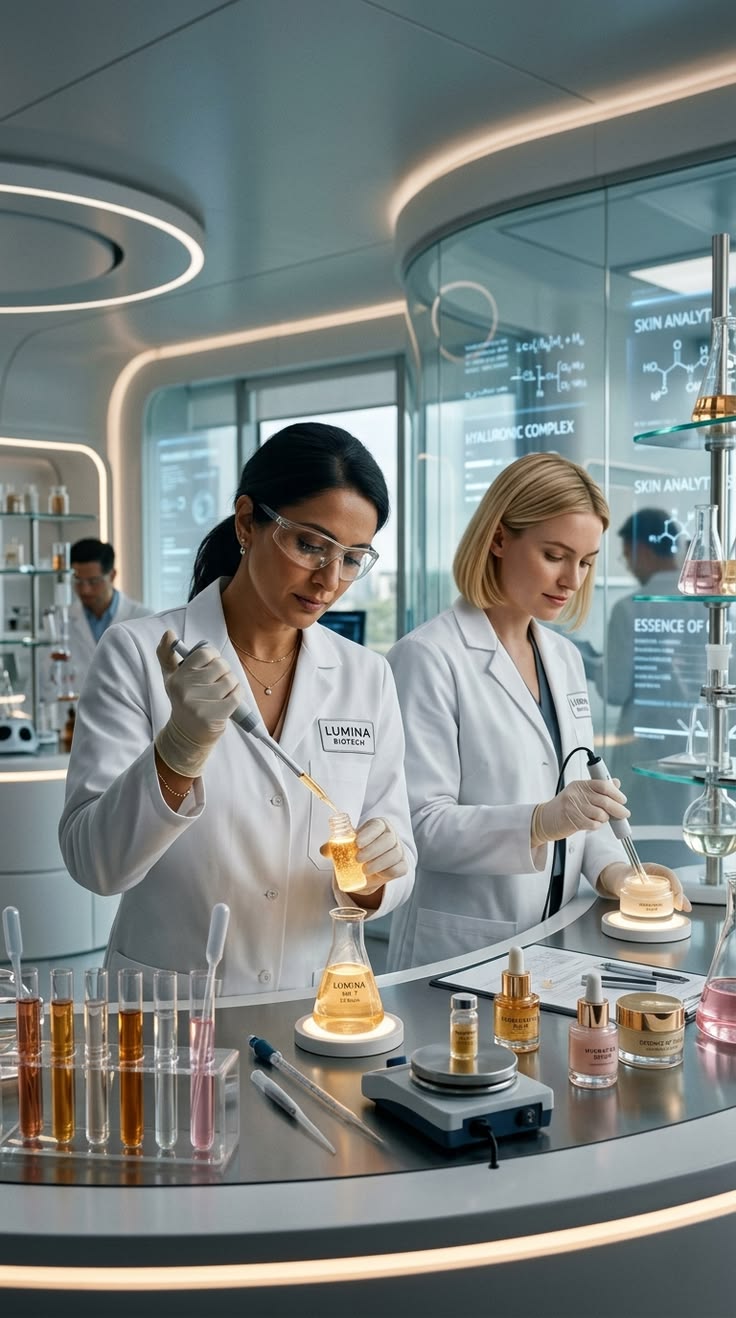
Cosmetic Brand Cuts Batch Recall Time from 3 Days to 4 Hours with Odoo
In cosmetic manufacturing, product quality and traceability are more than operational priorities—they're essential for consumer safety, regulatory compliance, and brand reputation. When a supplier identifies a potential issue with a raw material, manufacturers must quickly determine which finished products are affected, where they have been shipped, and what action is required.
For one cosmetic manufacturer in Gujarat, that process once relied entirely on paper records. Tracing a single raw material lot across production batches and customer shipments required days of manual cross-checking, delaying critical decisions during quality incidents.
By implementing Odoo Manufacturing and Quality with complete lot and serial traceability, the company transformed its quality management process—reducing batch recall trace time from three days to less than four hours, improving recall accuracy, and eliminating paper-based quality records across all production lines.
At a Glance
✓ Batch Recall Trace Time: 3 Days → Under 4 Hours
✓ Traceability: 100% raw material to finished goods visibility
✓ Recall Scope: 60% reduction in unnecessary product recalls
✓ Quality Control: Three production lines operating completely paperless
Client Overview
The client is a growing cosmetic manufacturer producing skincare and personal care products from a single manufacturing facility in Vapi, Gujarat. The plant operates three production lines and manufactures approximately 180 finished goods batches every month, supplying products across multiple SKUs.
To improve production visibility, quality control, and regulatory compliance, the company implemented Odoo Manufacturing and Odoo Quality with complete lot and serial traceability throughout the manufacturing process.
Industry: Cosmetic Manufacturing (Skincare & Personal Care)
Location: Vapi, Gujarat
Manufacturing Facility: Single Plant
Production Lines: 3
Monthly Production: Approximately 180 Finished Goods Batches
Solution: Odoo Manufacturing + Odoo Quality + Full Lot Traceability
The Challenge: A Quality Flag Nobody Could Trace Fast Enough
Before implementing Odoo, production records were maintained entirely on paper. Raw material receipts, production batches, quality inspections, and dispatch information were stored in separate registers that could only be connected by manually matching batch numbers.
Although this process worked during routine operations, it became a serious operational risk whenever quality issues occurred.
The turning point came when a supplier notified the company about a potential quality issue affecting one lot of preservative that had already been used in production. The quality team needed to answer several urgent questions:
- Which finished goods contained the affected raw material?
- Which production batches had consumed that lot?
- Where had those products been shipped?
- Which customers needed to be contacted?
Finding those answers required three employees to manually search paper registers, compare production dates, cross-reference raw material lot numbers, and verify dispatch records one page at a time.
The complete trace took nearly three days.
Quality Head:
"We knew something was wrong on day one. It took us three more days to know exactly what to do about it. In a recall situation, those three days are the ones that matter most."
Without complete visibility, the company chose the safest option available—recalling a much wider range of finished products than was ultimately necessary. While understandable from a risk management perspective, it resulted in unnecessary inventory loss and additional operational costs.
Key Operational Challenges
The company identified several issues that needed to be addressed before future quality incidents could be managed efficiently.
✓ Raw material lots and finished goods batches had no digital relationship, requiring manual record searches.
✓ Product recall decisions were based on incomplete information, causing wider recalls than necessary.
✓ Quality inspections were recorded on paper forms that could not be reviewed instantly during active investigations.
✓ Customer shipment information could only be found by manually checking dispatch registers.
✓ Regulatory and customer audits required several days of collecting paper documents before inspections.
Why Traceability Isn't Optional in Cosmetic Manufacturing
Cosmetic manufacturing operates under increasingly strict quality and compliance requirements. Manufacturers must demonstrate complete visibility from raw material receipt through production, packaging, storage, and customer delivery.
Retail chains, export customers, and regulatory authorities expect manufacturers to produce complete batch genealogy quickly whenever questions arise. Delayed or incomplete information increases operational risk, extends recalls, and can damage customer confidence.
Digital traceability is no longer simply a compliance requirement—it has become a competitive advantage for manufacturers serving modern retail and distribution networks.
Example: When a retailer requests documentation for a specific cosmetic batch, companies using digital traceability can generate complete production genealogy within minutes instead of spending days locating paper records.
The Solution: End-to-End Batch Traceability Inside Odoo
To eliminate manual record keeping and accelerate quality investigations, Sunray Datalinks implemented Odoo Manufacturing and Odoo Quality with complete lot and serial traceability throughout the production lifecycle.
Rather than simply digitising paper records, the solution connected every stage of manufacturing—from raw material receipt to finished goods dispatch—into one continuous digital workflow. Every transaction became automatically linked, making complete batch genealogy available within seconds whenever required.
1. Lot Tracking from Goods Receipt to Customer Dispatch
Every raw material received by the plant is assigned a unique lot number immediately upon arrival. From that point forward, Odoo automatically maintains the relationship between that lot, every manufacturing order that consumes it, the finished goods batch produced, and the customer orders where those products are ultimately shipped.
Once the lot number is captured during goods receipt, operators never need to re-enter or manually reference it again. The complete genealogy is maintained automatically throughout production.
Example: A preservative received under Lot PR-24018 is consumed across multiple manufacturing orders.
Months later, the quality team can instantly identify every finished goods batch and every customer shipment containing material from that specific lot without reviewing a single paper record.
2. Quality Control Integrated into Production
Previously, quality inspections were completed on printed forms that were filed after each production shift. During an active quality investigation, locating those records often became another manual task.
With Odoo Quality, inspections now take place directly on tablets positioned at each production stage. Incoming material inspections, in-process quality checks, and pre-dispatch approvals are completed digitally and attached immediately to the batch record.
Every inspection is timestamped, linked to the relevant manufacturing order, and available for review in real time.
Example: An operator completes an in-process viscosity inspection using a tablet directly on the production floor.
The inspection result immediately becomes part of that batch's permanent digital record instead of waiting until paperwork is filed later in the day.
3. Instant Batch Genealogy
One of the biggest improvements came from Odoo's ability to generate complete batch genealogy instantly.
Searching for a single finished goods batch now displays the entire production history, including:
- Raw material lots consumed
- Manufacturing orders involved
- Quality inspections completed
- Operators responsible
- Finished goods produced
- Customer shipments linked to that batch
Previously, answering those same questions required comparing multiple paper registers and manually matching dates and batch numbers.
Example: A customer reports an issue with one production batch.
Within seconds, the quality manager can identify the raw materials used, verify inspection results, review production history, and see every customer order containing products from that batch.
4. Automatic Recall Scoping
Perhaps the most valuable improvement was Odoo's ability to define recall scope automatically.
When a raw material lot is quarantined or flagged by a supplier, the system immediately identifies every finished goods batch that actually consumed that material—and only those batches.
This replaces cautious guesswork with precise, data-driven decisions, allowing the quality team to isolate affected inventory without unnecessarily recalling unaffected products.
Example: A supplier places one preservative lot under investigation.
Rather than pulling every product manufactured that week, Odoo automatically generates a filtered list showing only the finished goods batches that actually used that specific raw material lot.
Implementation: A 10-Week Rollout Without Disrupting Production
Because the plant operated continuously across three production lines, the implementation had to improve processes without interrupting active manufacturing. Rather than replacing the existing system overnight, Sunray Datalinks adopted a phased rollout strategy that allowed production to continue while operators gradually transitioned to the new digital workflow.
Each phase focused on validating processes, training employees, and refining the solution before expanding deployment across the entire facility.
Implementation Timeline
Weeks 1–2
Production workflows were mapped stage by stage on the factory floor, and a structured lot numbering system was designed around the company's raw materials, manufacturing process, and SKU hierarchy.
Weeks 3–5
Odoo Manufacturing and Odoo Quality were configured, while digital quality checklists were built to match the company's existing Standard Operating Procedures (SOPs) instead of forcing generic workflows.
Weeks 6–7
One production line served as the pilot environment where operators were trained to record production batches and quality inspections using tablets.
Weeks 8–10
The remaining production lines were migrated to the new system, historical open batch data was transferred, and the plant completed a supported transition period before full go-live.
Implementation Insight:
The pilot deployment uncovered two small gaps in the original lot numbering strategy related to sub-assemblies and rework batches. Because these issues were discovered before the company-wide rollout, they were resolved quickly without disrupting production.
Training also focused heavily on shift supervisors, ensuring they could confidently support operators and resolve day-to-day questions once the system became part of normal production operations.
Results: Four Months After Go-Live
Within four months of implementation, the manufacturer experienced measurable improvements across quality management, traceability, audit readiness, and production efficiency.
✓ Batch recall trace time reduced from approximately three days to under four hours.
✓ Recall scope improved by 60%, significantly reducing unnecessary product withdrawals.
✓ Quality checkpoint compliance became visible in real time across all production lines.
✓ Audit preparation time dropped from several days to less than one day.
✓ All three production lines now operate with zero paper batch registers.
One of the biggest validations of the implementation came only two months after go-live, when another supplier quality notification required the company to perform a real traceability exercise.
Using Odoo's genealogy tools, the quality team identified every affected batch and corresponding customer shipment in under four hours—a process that previously required three full days of manual investigation.
Improved Audit Readiness
Six weeks after the implementation, the manufacturer underwent a major retail customer audit.
For the first time, document requests were answered directly from live Odoo reports rather than by searching filing cabinets and paper registers. Batch genealogy, inspection history, and production records were available within minutes, creating a far more efficient audit experience for both the company and the auditor.
Quality Head:
"The four-hour trace wasn't a stress test—it was a real supplier flag. We had the complete batch list before we'd normally have finished pulling the paper registers off the shelf."
What Made the Difference
The project's success came from more than simply replacing paper with software. Several practical decisions ensured the new system delivered measurable business value from day one.
Traceability by Default
Lot information is captured automatically throughout production, eliminating the need for employees to manually maintain traceability records.
Digital Quality Capture
Tablet-based inspections ensure quality data is recorded immediately where work takes place, reducing errors and preventing missing documentation.
Data-Driven Recall Decisions
Instead of expanding recalls based on uncertainty, the quality team now relies on precise genealogy reports to identify only the products that are genuinely affected.
Phased Deployment
Testing the solution on one production line before full rollout allowed improvements to be made early while minimizing operational risk.
When a Quality Issue Happens, How Fast Can You Trace It?
Quality issues are unpredictable, but your response doesn't have to be. If tracing a single raw material lot still means searching paper registers, spreadsheets, or disconnected systems, every additional hour increases operational risk, customer impact, and recall costs.
Modern manufacturers need complete visibility across the entire production lifecycle—from incoming raw materials and quality inspections to finished goods and customer dispatch. With digital batch genealogy, critical information is available in minutes rather than days, enabling faster decisions and more targeted recalls.
Whether you're preparing for stricter regulatory requirements, improving audit readiness, or replacing paper-based production records, implementing end-to-end traceability can significantly strengthen both operational efficiency and product quality management.
How Sunray Datalinks Helps Manufacturers Modernize Quality Operations
At Sunray Datalinks, we help manufacturers replace manual production processes with integrated digital systems built on Odoo ERP. Our solutions improve traceability, automate quality management, simplify compliance, and provide complete visibility across manufacturing operations.
From cosmetics and pharmaceuticals to food processing, engineering, chemicals, and industrial manufacturing, we design ERP solutions that fit the way each factory actually operates rather than forcing businesses to adapt to generic software.
Our approach combines process analysis, ERP implementation, workflow automation, and ongoing support to ensure manufacturers achieve long-term operational improvements—not just successful software deployments.
Our Manufacturing ERP Services Include:
✓ Odoo Manufacturing Implementation
✓ Batch & Lot Traceability Solutions
✓ Quality Management (Odoo Quality)
✓ Production Planning & Shop Floor Automation
✓ Barcode & Warehouse Management
✓ ERP Integration & Custom Development
✓ Manufacturing Dashboards & Business Intelligence
✓ Ongoing ERP Support & Process Optimization
Conclusion
For this cosmetic manufacturer, implementing Odoo Manufacturing and Quality transformed traceability from a slow, manual process into a real-time operational capability. What once required three days of paperwork can now be completed in less than four hours using live production data.
Beyond faster recalls, the project delivered stronger quality control, improved audit readiness, greater confidence in production records, and completely paperless batch management across all three production lines.
As regulatory expectations continue to increase, manufacturers that invest in digital traceability will be better positioned to respond quickly to quality incidents, satisfy customer audits, and maintain trust in their products and brand.
Ready to Improve Manufacturing Traceability?
If your manufacturing team still relies on paper records or disconnected spreadsheets to manage production and quality, now is the time to modernize your operations with Odoo ERP.
Sunray Datalinks helps manufacturers implement scalable ERP solutions that improve traceability, automate quality control, simplify compliance, and provide complete visibility across every stage of production.
Whether you're planning your first ERP implementation or upgrading an existing manufacturing system, our specialists can help you design a solution tailored to your production processes and future growth.
Download the Complete Case Study or Book a Free Demo
See how Odoo Manufacturing and Quality helped a cosmetic manufacturer reduce batch recall trace time from three days to under four hours while achieving complete lot traceability across the production lifecycle.
Learn how digital batch genealogy, paperless quality inspections, and automated recall scoping can help your manufacturing business improve compliance, reduce operational risk, and strengthen customer confidence.
Speak with our manufacturing ERP specialists to discover how Odoo can streamline your production processes and prepare your business for future growth.
Book Free Demo